

The Structure of Prosperity: The Trajectory

"Systems grow, strain, and reorganize before they truly advance."
The Question
Over time, it became clear to me that prosperity, as it appears in societies and economies, is not random. This is most evident in how societies organize themselves as they evolve. Patterns repeat across countries, industries, and periods of history: these arrangements invest effort, improve technology, and expand their activity yet do not consistently achieve sustained prosperity, while others, often with fewer apparent advantages, succeed. This pattern can be seen not only in modern economies but also in the long evolution of human societies, from small bands to tribes, to villages, and later to cities, where new roles, leadership structures, and coordination needs gradually emerged as groups grew. The consistency of this pattern makes it difficult to dismiss as coincidence, and it reflects something many of us have observed, even if we have not fully recognized it.
Recognizing that such a pattern exists is an important step, yet it leaves a deeper question unresolved. We can see how these structures evolve, but we do not yet understand what drives that evolution. Observing what happens is not the same as understanding how and why it happens. One can look at a clock and see that it tells time, yet without understanding its mechanism, one cannot build another clock, improve its accuracy, or repair it when it fails. Likewise, one can observe that an airplane flies, yet without understanding the forces and structure that make flight possible, one cannot design or operate one with confidence. The same limitation applies to prosperity: a focus on outcomes alone leaves us dependent on repetition, imitation, and, at times, luck.
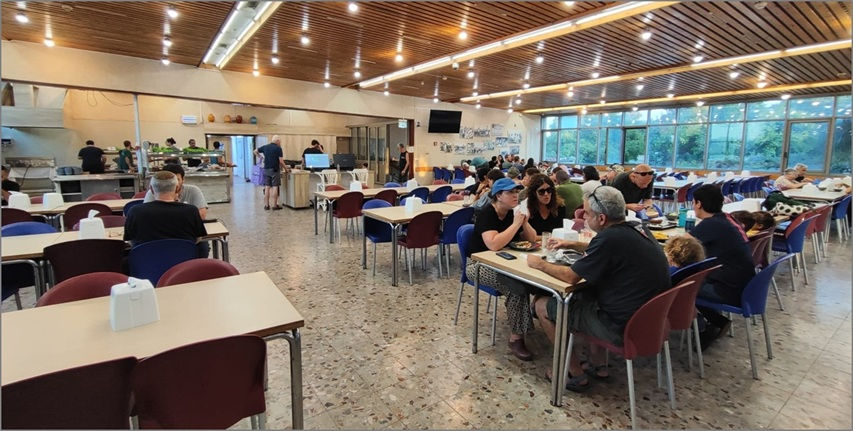
This limitation became clear to me not only in analysis but also in practice. Growing up on the Kibbutz and later observing its evolution, I saw a system that functioned remarkably well under certain conditions, even without a clear understanding of why it worked, mirroring the same pattern seen in earlier forms of human organization. As long as those conditions remained stable, it could be replicated in similar environments with consistent success. Once those conditions began to change, its performance weakened, and attempts to reproduce it in different contexts often failed. This was not immediately visible because the change had begun long before its effects appeared, leaving us unable to identify it in time or respond effectively. The limitation was not a lack of effort or commitment but a lack of understanding of the underlying mechanism that made it work in the first place.
This limitation is not unique to social systems. In many domains, including physics, chemistry, and biology, people were able to reproduce outcomes long before they understood the principles behind them. Only after those mechanisms were uncovered did these fields advance in a fundamental way, enabling deliberate design, reliable prediction, and continuous improvement. What was once achieved through trial and error became something that could be engineered. The same challenge appears here, though in a different domain.
These observations point to a gap that cannot be closed by improving what we already do. If prosperity follows a pattern yet does not consistently align with effort, the explanation must lie in the process that connects action to outcome. Understanding that process requires moving beyond observation and examining the structure through which systems evolve, the forces that drive that evolution, and the conditions under which it leads to sustained outcomes rather than temporary gains. We will return to the evolution of human systems as a guiding thread, but the objective is broader: to understand the mechanism itself.
To address this, we will follow a path that unfolds in three steps, beginning with the trajectory by which systems evolve over time, not as isolated improvements but as a pattern of change that appears across domains and across history, then turning to the mechanism that drives this trajectory, and finally examining the outcomes that emerge from this process and why they differ so significantly between systems that appear, at first glance, to be similar. We begin with the trajectory because, without understanding how these arrangements change, we cannot understand why they succeed or fail, nor can we improve the systems on which we depend.
The Pattern
We can see this trajectory clearly by examining how these forms of organization evolve. The pattern does not belong to a single place, period, or type of system. It appears that wherever effort is applied with the expectation of improvement, the same effort does not consistently produce the same outcome. This is evident in the way human societies themselves evolved. Small bands were able to function effectively through direct coordination and shared roles. As these groups grew into tribes, most activities remained similar, yet new roles emerged, including leadership and basic coordination functions, allowing the group to operate at a larger scale. At this stage, the structure still works, even as it becomes more complex.
As growth continues and tribes expand into villages, the same approach can no longer meet rising demands. Activities become more varied, roles more specialized, and interactions more frequent as the number of connections grows beyond what direct coordination can reliably handle. At this point, continuing in the same way no longer works, no matter how much effort is applied. Some communities reorganize and continue to function effectively, while others struggle even though they put in similar effort. What we are seeing is not a collection of isolated cases but the same pattern repeating as systems grow. This progression is not unique to this example but reflects a broader pattern in how societies develop.
Over time, as villages develop into larger, more complex forms of organization, such as cities, the divergence becomes more pronounced. Some are able to reorganize their activities and maintain coherence, while others remain constrained by arrangements that no longer fit their level of activity. This pattern can be seen not only in human societies but also in farming, business, and entire economies, where increasing investment, production, or scale does not guarantee sustained improvement in outcomes. Similar starting points may lead to entirely different results.
While we focus here on human systems, this pattern is not unique to them. In biological systems, organisms operating under similar conditions show markedly different levels of adaptation and persistence. In physical and chemical systems, outcomes can be reproduced under controlled conditions, yet small differences in how elements are arranged lead to entirely different results. In each case, what matters is not only which elements are present but also how they are organized and how they interact.
Seen together, these observations reveal something more fundamental. These forms of organization do not respond to effort in a predictable or linear way. As they grow, they follow paths that lead to different outcomes, even when starting from similar conditions. The pattern is not random, but neither is it immediately obvious, because it is shaped by how the structure develops over time rather than by any single decision or input. The question is no longer whether a pattern exists, but what determines the path a system follows.
Structure
What we saw earlier as a pattern becomes clearer when we examine how structure changes as systems grow. In small bands, activities are relatively simple and often shared, with members performing similar tasks and coordination achieved through direct interaction. As these groups expand into tribes, new roles begin to emerge, including leadership and basic coordination functions, enabling the group to operate at a larger scale. At this stage, the structure remains relatively simple, yet it already reflects a shift from uniform activity toward differentiated roles.
Structure, in this context, refers to the organization of activities, roles, and relationships within the system.
As growth continues and tribes develop into villages, the same way of organizing activities can no longer sustain the increasing demands. The range of tasks expands, roles become more specialized, and activities are distributed across different parts of the system. This change does not happen by design alone, but because the previous way of operating can no longer sustain the system. At some point, the group can no longer function effectively when everyone performs similar tasks, and work must be reorganized so that different roles carry distinct responsibilities.
As roles become more distinct, the relationships among them also change. What one part of the system does depends on what another part has already done, creating a chain of interdependent activities. At this stage, no single participant can fully see or manage the system as a whole, and performance increasingly depends on how well these parts work together. If one part fails or becomes misaligned, others are affected, even if they are functioning correctly. The system becomes more capable, but also more sensitive to breakdowns in coordination.
This shift introduces a new challenge: improving individual parts of the system no longer guarantees overall improvement. Each part may become more efficient, yet the overall outcome may remain unchanged or even deteriorate if the relationships among parts are not properly organized. What once worked as a collection of relatively independent activities now requires a higher level of coordination, because the system’s performance depends on how its parts are structured and connected, rather than on how each part performs in isolation.
As these demands accumulate, the existing structure begins to constrain the system. Additional effort yields diminishing returns, and further expansion introduces pressures that cannot be resolved within the same arrangement. The system is not failing because its parts are ineffective, but because its structure can no longer support the level of activity it carries. At this stage, change is no longer optional, because continuing in the same way prevents further progress. The system must reorganize its operations, moving from one structural arrangement to another to sustain further growth. What appeared earlier as a pattern now reveals itself as a structured process, in which growth forces changes in organization, and those changes reshape what the system can achieve, a process that unfolds consistently as systems continue to grow.
Trajectory
What we are seeing is not a single transformation but a recurring progression that emerges as systems grow. The movement from bands to tribes, from tribes to villages, and from villages to cities is not a sequence of isolated historical events but an expression of a consistent structural progression. Across human history, societies have evolved through a recognizable sequence of structural forms. These range from small, directly coordinated bands to larger tribal organizations, to settled villages, and later to complex urban systems. Each transition reflects an increase in scale, differentiation, and interdependence, and each stage enables new capabilities while introducing new constraints.
Each stage creates a period of relative stability. Within a given arrangement, these structures operate effectively and expand their activity, often creating the impression that the current way of organizing work can continue indefinitely. Yet this stability is temporary. As they grow, the same structure that supported progress begins to generate strain. At first, this strain appears as a growing difficulty in maintaining performance. These arrangements continue to improve, yet the gains become harder to achieve and the effort required to sustain outcomes increases. What once felt like steady progress now feels constrained, even as expansion continues. Eventually, a threshold is reached beyond which further improvement within the same arrangement is no longer possible. Continuing in the same way does not restore performance and may even accelerate decline. To continue developing, the system must reorganize itself, giving rise to a new structural arrangement that can sustain a higher level of activity and interdependence.
This sequence, in which systems grow, strain, and reorganize, does not occur once but repeats as they continue to evolve. Each new structure creates new possibilities yet introduces new limits, setting the conditions for the next transition. Prosperity is not created by effort alone but by how these structures organize that effort as they grow. We can now see the trajectory clearly; these systems do not simply improve within a fixed structure but move through a sequence of structural arrangements, each of which enables growth for a time before reaching its limit. Yet while the trajectory is visible, the forces that produce it remain unclear. The question that follows is: what drives this process, and why does it lead to sustained prosperity in some cases while constraining others?
=-==-=-=-=-=-=-=
Subscribe here, free!
"Mental and Economic Freedom Are Interconnected."
See you soon,
Nimrod

Dr. Nimrod Israely is the CEO and Founder of Dream Valley and Biofeed companies and the Chairman and Co-founder of the IBMA conference. +972-54-2523425 (WhatsApp), or email nisraely@biofeed.co.il
P.S.
If you missed it, here is a link to last week's blog, “What Is the Economy“.
P.P.S.
Here are ways we can work together to help your agro sector and rural communities step forward and shift from poverty into ongoing prosperity:
* Nova Kibbutz and consultancy on rural communities' models.
* Local & National programs related to agro-produce export models - Dream Valley global vertical value and supply chain business model and concept connects (a) input suppliers with farmers in developing economies and (b) those farmers with consumers in premium markets.
* Crop protection: Biofeed, an eco-friendly zero-spray control technology and protocol.
*This article addresses general phenomena. The mention of a country/continent is used for illustration purposes only.


Comments